Defining the business decision-making process
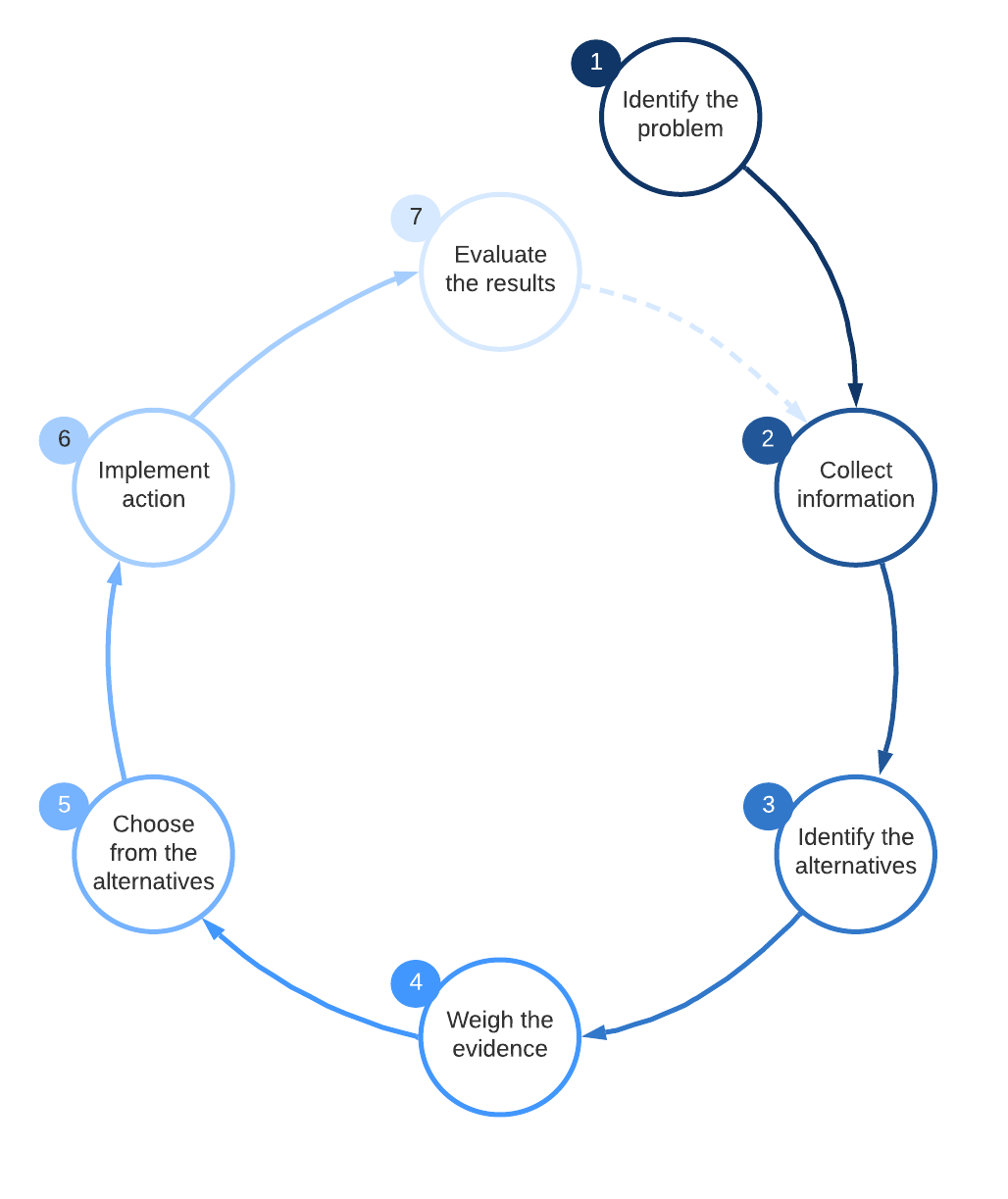
The business decision-making process is a step-by-step process allowing professionals to solve problems by weighing evidence, examining alternatives, and choosing a path from there. This defined process also provides an opportunity, at the end, to review whether the decision was the right one.
7 decision-making process steps
Though there are many slight variations of the decision-making framework floating around on the Internet, in business textbooks, and in leadership presentations, professionals most commonly use these seven steps.
1. Identify the decision
To make a decision, you must first identify the problem you need to solve or the question you need to answer. Clearly define your decision. If you misidentify the problem to solve, or if the problem you’ve chosen is too broad, you’ll knock the decision train off the track before it even leaves the station.
If you need to achieve a specific goal from your decision, make it measurable and timely.
2. Gather relevant information
Once you have identified your decision, it’s time to gather the information relevant to that choice. Do an internal assessment, seeing where your organization has succeeded and failed in areas related to your decision. Also, seek information from external sources, including studies, market research, and, in some cases, evaluation from paid consultants.
Keep in mind, you can become bogged down by too much information and that might only complicate the process.
3. Identify the alternatives
With relevant information now at your fingertips, identify possible solutions to your problem. There is usually more than one option to consider when trying to meet a goal. For example, if your company is trying to gain more engagement on social media, your alternatives could include paid social advertisements, a change in your organic social media strategy, or a combination of the two.
4. Weigh the evidence
Once you have identified multiple alternatives, weigh the evidence for or against said alternatives. See what companies have done in the past to succeed in these areas, and take a good look at your organization’s own wins and losses. Identify potential pitfalls for each of your alternatives, and weigh those against the possible rewards.
5. Choose among alternatives
Here is the part of the decision-making process where you actually make the decision. Hopefully, you’ve identified and clarified what decision needs to be made, gathered all relevant information, and developed and considered the potential paths to take. You should be prepared to choose.
6. Take action
Once you’ve made your decision, act on it! Develop a plan to make your decision tangible and achievable. Develop a project plan related to your decision, and then assign tasks to your team.
7. Review your decision
After a predetermined amount of time—which you defined in step one of the decision-making process—take an honest look back at your decision. Did you solve the problem? Did you answer the question? Did you meet your goals?
If so, take note of what worked for future reference. If not, learn from your mistakes as you begin the decision-making process again.
Tools for better decision-making
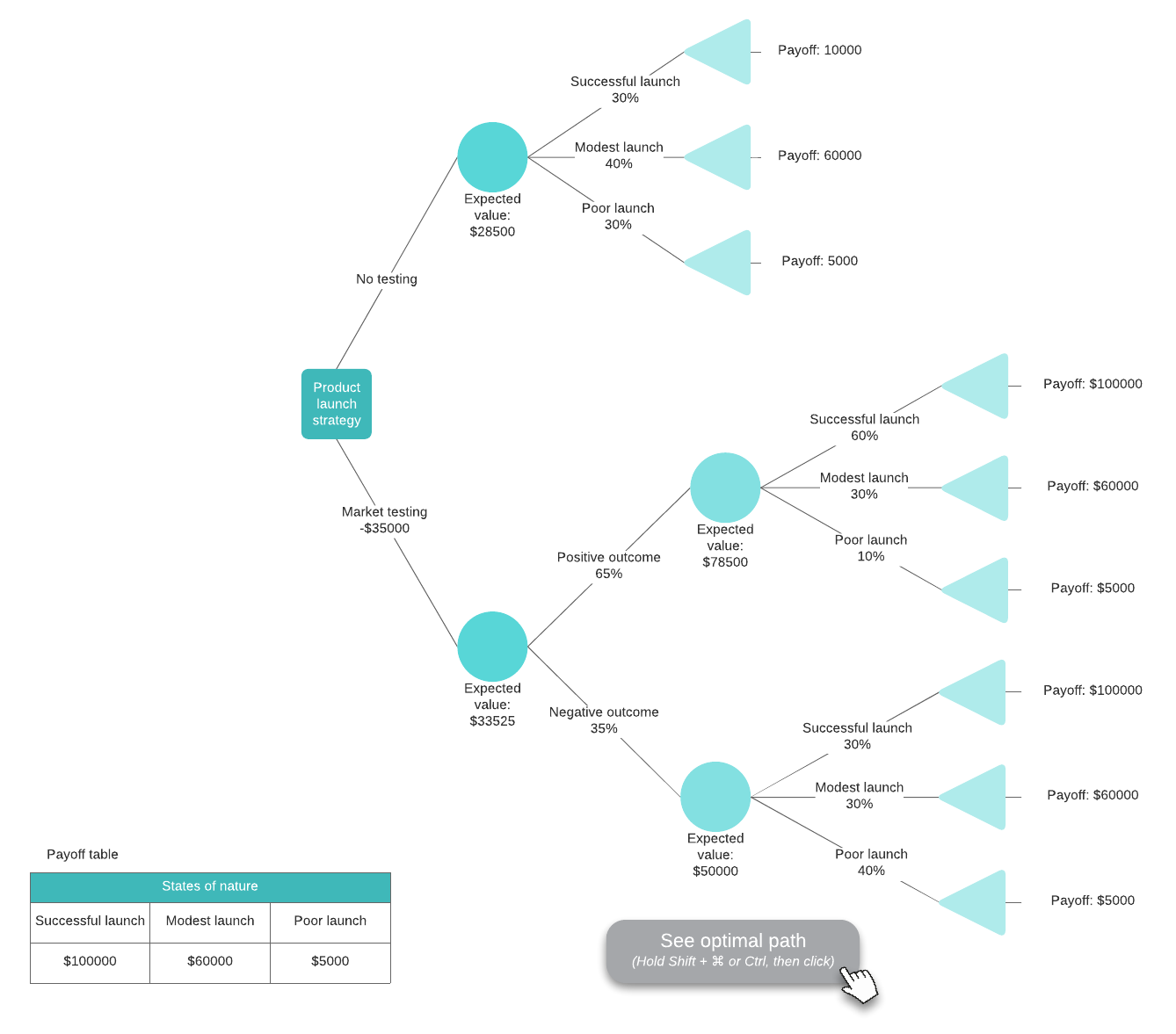
Depending on the decision, you might want to weigh evidence using a decision tree. The example below shows a company trying to determine whether to perform market testing before a product launch. The different branches record the probability of success and estimated payout so the company can see which option will bring in more revenue.